Oak, Ash or Beech? Reading the Character of Wood Grain
Oak, ash or beech wood grain can look different from sample to sample. Learn what to inspect before choosing a finish, tabletop or wooden object.
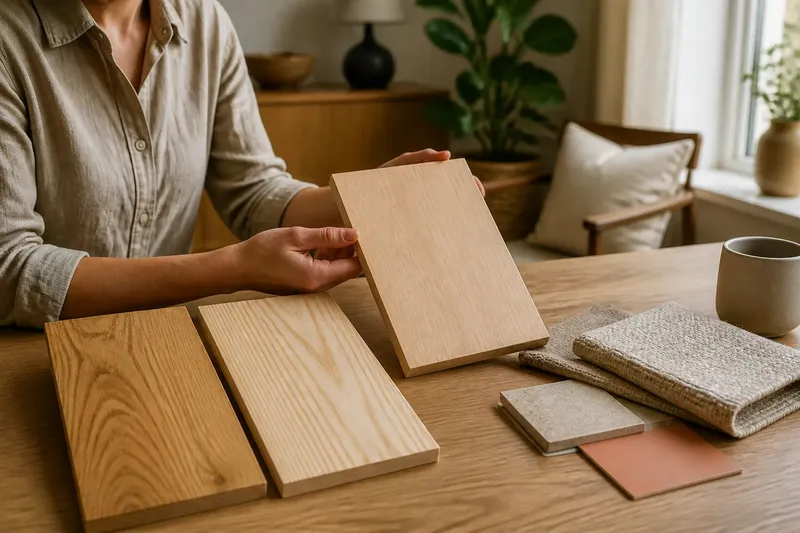
The most common mistake when comparing oak, ash or beech wood grain is judging a tiny, freshly sanded sample as if it were the whole object. That can mean choosing a finish that makes a busy tabletop feel even busier, or expecting a quiet beech surface to show dramatic stripes. A closer look at the grain, color variation and cut can give you a more useful preview.
Wood is not printed wallpaper: its pattern shifts across boards, and even pieces from the same species differ. Treat a sample like a sentence from a book, not the whole story. Notice what it tells you, then ask what it cannot show about the finished piece.
Why does the grain look different from the photo?
Online images flatten a few things that matter in person. Lighting can make pale ash look honey-colored or turn the contrast in oak into a strong graphic pattern. A camera may also make the grain look more uniform than it is, especially when the image shows a single carefully selected board.
First, compare samples in the room where the wood will live. Hold them near the floor, wall color, or nearby furniture, and look in both daylight and evening light. Turn the sample as you view it: grain direction and changing light can make the same surface seem calmer or more active.
Then check whether you are comparing the same kind of cut. A board cut through the tree’s growth rings can show cathedral-like arches; another cut can reveal straighter, more parallel lines. Those patterns are not simply oak, ash, or beech traits. The way the log is sawn matters too.
Why does one oak sample look calm and another look busy?
Oak often has clear, open-looking grain, but the pattern can range from long, straight lines to sweeping arches. Its natural variation may include darker streaks, small knots, and differences in tone from board to board. Some oak also shows conspicuous rays—fine marks that can appear as flecks or ribbons, depending on the cut.
If a sample seems too active, check whether the boldest marks are typical of the object or just a feature of that particular board. For a large tabletop, a small sample may conceal the way arches repeat across a wider surface. Ask to see a larger board or an image of the actual piece if the pattern will be a major part of the room.
Oak is a useful choice to consider when you want grain that remains visible under a clear finish. But “oak” alone does not predict how graphic the final surface will look. The cut, board selection, finish, and lighting all shape the impression.
Why can ash look striped or unexpectedly pale?
Ash often has a light base color and a pronounced, straight grain that can read as stripes. Its boards may vary in shade, and some show more contrast between earlywood and latewood—the bands formed during different parts of a tree’s growing season. That contrast can make a broad surface feel lively even when the overall color is pale.
When ash looks unusually uniform in a product photo, look for a view that shows more than one board. The piece may have been selected for a restrained appearance, or the lighting may have washed out the lines. For a cabinet door or small tray, a sample can communicate the grain direction well; for a wide desk, ask how the boards are arranged.
Ash is worth considering if you like visible linear grain but want a lighter-looking wood. If you prefer a nearly plain surface, inspect an actual finished sample rather than assuming that pale color means little pattern.
Why does beech sometimes seem almost plain?
Beech commonly has a fine, close grain that can appear quieter than oak or ash. Its color may lean cream, pinkish, or warm brown, and the tone can shift across a board. Small flecks or subtle markings may appear, but they do not always stand out in a small or dimly lit sample.
This understated grain can suit a wooden object when you want its shape to draw more attention than its surface. It can also surprise someone expecting a bold, striped pattern. Before choosing beech for a large visible area, inspect a larger piece in good light and look for the degree of color variation that feels comfortable to you.
Do not dismiss the wood as featureless because a small swatch seems plain. A larger surface gives its fine texture and gentle shifts more room to register, much as a quiet pencil line is easier to notice across a clean sheet than on a tiny scrap.
How can you tell whether the finish is changing the grain?
A clear finish can deepen color and sharpen contrast, while a tinted finish may shift the overall tone or soften differences between boards. The wood beneath is still the same species, but the surface treatment changes what your eye sees. A raw, sanded sample is therefore not a reliable stand-in for a sealed tabletop or finished cabinet.
Ask to compare the unfinished wood with a sample carrying the intended finish. If the color matters, view both next to the materials that will sit nearby, such as painted cabinetry, a rug, or a stone counter. Check the sheen too: a glossy surface catches more reflections, which can make grain and color seem less consistent as you move around it.
Where a product’s finish or wood description is unclear, check the maker’s label or instructions before making a choice. Species names and finish terms can be used broadly, so the actual sample is the clearest guide to appearance.
What should you look for before choosing a wood grain?
- Pattern scale: Are the arches, stripes, or fine lines appealing at the size of the finished object? Request a larger view if the sample is small.
- Color range: Does the sample show several tones, or only one? Decide whether variation across a larger surface would feel welcome.
- Board arrangement: Are boards likely to run in one direction, alternate, or form a more varied pattern? Ask to see the intended layout where it is visible.
- Cut: Do the lines look straight, or do they form arcs and flecks? Compare samples with different cuts if the pattern is central to your decision.
- Finished appearance: Does the sample have the same stain, clear coat, and sheen as the object you are considering?
- Viewing light: Does the wood still look right near a window and under your usual evening lighting?
Say you are choosing a beech side table for a room with warm painted walls. A small, pale sample looks nearly blank against the store counter, so you set a finished sample beside the wall paint at home. Its pinkish cast becomes more noticeable, while the fine grain stays quiet. That gives you a specific decision: keep the beech if the warmer tone suits the room, or compare a cooler sample if it does not.
What do shoppers often ask about oak, ash and beech wood grain?
Which wood grain looks the most prominent?
Oak and ash often show stronger, more readable patterns than beech, though the cut and board selection can change that impression. Compare finished samples rather than relying on the species name alone.
Does a pale wood always have subtle grain?
No. Ash can be pale and strongly lined, while beech may look softer and more even. Color and grain prominence are related only loosely, so inspect both separately.
Can a clear finish change how grain looks?
Yes. A clear finish can deepen the wood’s color and make contrast more noticeable, while sheen affects reflections across the surface. Look at a finished sample in the lighting where the object will be used.
Is a small sample enough to choose a large tabletop?
It can help you compare color and basic grain direction, but it may not show the pattern across several boards. Ask for a larger sample or a view of the planned board arrangement before settling on a prominent surface.
For a confident choice, keep the wood grain question specific: do you want oak’s changing shapes, ash’s clear lines, or beech’s quieter texture? Then inspect the cut, finished surface, and color in your own room. That small act of comparison turns a species name into a practical sense of how the object may sit among the things you already live with.