A Seasonal Reset for a Small Everyday Display
A seasonal reset for a small everyday display keeps useful objects visible, makes room for changing routines, and gives each item a clear place to return.
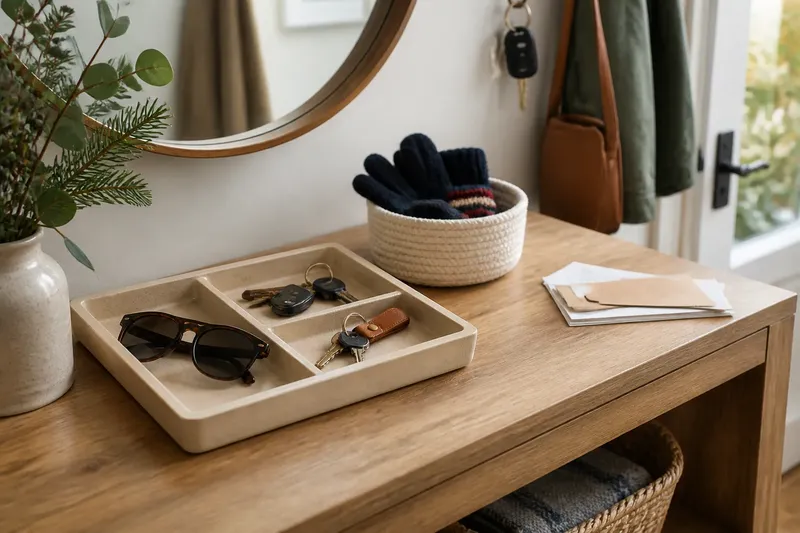
The common mistake with a small everyday display is arranging it once and expecting it to work all year. Gloves crowd the sunglasses, or a decorative sprig takes over the spot where keys should land. The cost is a surface that looks composed but stops serving the season’s routine. A simple seasonal reset keeps the display useful without asking you to start from scratch.
Think of a tray on an entry console, a dresser corner, or one end of a kitchen counter. Its job is to hold a few objects you reach for in that particular place, while still looking like part of the room. The reset is less like redecorating and more like swapping the contents of a coat pocket: keep what the current routine calls for, and put the rest away.
What should stay in a small everyday display?
Begin with the surface’s location and the moment it serves. By the front door, keys and sunglasses may belong together; beside a bed, reading glasses and lip balm may make more sense. Select objects that are used there, not everything small enough to fit.
Set out the likely candidates and ask whether each one is used in that spot, needs to be visible, and can be picked up without moving another object. Items used only occasionally can live in a nearby drawer or box. Sentimental pieces deserve a place, too, but they do not have to share a working display with daily essentials.
How do you reset the display for a new season?
Use the change in weather or routine as a prompt to edit, not as a reason to buy a themed set of decorations. Before adding anything, remove objects that no longer earn their place. Then consider what is newly useful: perhaps gloves during colder commutes or sunscreen near a summer exit. Follow your own habits rather than the calendar alone.
Clear the surface and wipe it down. Sort the objects into three groups: still used here, useful elsewhere, and no longer needed in this arrangement. Return the first group, then add only seasonal items with a clear purpose. If a dish overflows, remove or relocate something before choosing a larger container.
Materials matter when the season brings damp, dusty, or delicate items into the mix. A glazed ceramic dish is straightforward to wipe; a fabric-lined box may suit jewelry better but is less appropriate for wet gloves. Keep items needing different care separate, and follow any care instructions for delicate or valuable objects.
How can the arrangement look considered without getting in the way?
Give the display a boundary: a tray, shallow dish, or small box can gather related pieces without making the whole surface a container. Leave a patch of open space for a temporary arrival, such as mail or a pair of gloves. That empty area is useful capacity, much like the space left in a tote bag so it can close without a struggle.
Arrange objects according to how they are handled. Put the key bowl where keys can be dropped in easily, and keep frequently used sunglasses from being buried beneath a scarf clip. A small seasonal decoration can add color, but place it where sleeves will not catch and hands can still reach the useful objects.
What should you check before keeping an item in the display?
- Check whether you use the item in this location; if yes, keep it visible, but if not, move it to a drawer or another spot that suits its use.
- Check whether you can pick it up without shifting its neighbors; if yes, keep the placement, but if not, spread the objects out or choose a wider tray.
- Check whether the item suits the current weather and routine; if yes, include it for the season, but if not, store it nearby until it becomes useful again.
- Check whether the container is easy to clean after the item is set down; if yes, keep the pairing, but if not, use a wipeable dish or separate the messy item.
- Check whether the display still has room for a temporary object; if yes, leave that open patch, but if not, remove an occasional item or use nearby storage.
- Check whether a decorative piece blocks a hand’s path or catches clothing; if yes, move it elsewhere, but if not, keep it as a modest accent.
How should a shared display handle different routines?
For a shared entry console, give each person a recognizable place, such as separate sections of a tray or individual hooks nearby. Keep shared items, like a small pair of scissors, distinct from personal keys and cards. If children use the display, choose sturdy containers and keep fragile or small objects out of reach when needed.
Imagine a household where two adults use the front door daily and a child often carries gloves. At the start of a colder stretch, they clear a console tray, return an unused summer card holder to a drawer, and place each adult’s keys in separate compartments. They add a small washable basket for the child’s gloves, then leave one corner of the console clear for incoming mail. The resulting arrangement gives each person a visible return spot, keeps damp fabric apart from keys, and preserves space for a temporary arrival; if the basket crowds the tray, they can move it to a nearby hook instead.
Which seasonal display questions come up most often?
How often should I reset a small everyday display?
Reset it when a season or routine change makes the current objects less useful, or when the surface becomes difficult to use. A quick edit is enough if most items still belong there.
Where should seasonal items go when they are out of use?
Put them in a nearby drawer, closet, or labeled box so they are easy to retrieve when needed. Close storage keeps the display focused without making the item hard to find later.
Can a seasonal display include decoration?
Yes, if the decoration leaves the useful objects easy to see and reach. A small branch in a narrow vase can work when it does not crowd the tray or catch clothing as people pass.
What if I have no spare table or counter?
Try a shallow wall shelf, a hook, or a pocket organizer near the routine the display supports. Choose a placement that does not obstruct a door or walkway and remains comfortable to reach.
How can you tell whether the seasonal reset worked?
Notice whether each object is easy to find and return, whether the surface remains usable, and whether seasonal additions are actually being picked up. If an item keeps migrating elsewhere, its assigned place may be inconvenient, or it may not belong in this display.
A seasonal reset for a small everyday display works best when it leaves room for the next change, too. Keep the tray or dish that suits the surface, but let its contents shift with what you carry, wear, and use. The display can look settled without being fixed: its most helpful detail is a clear place for the things that matter now.